

Multinational Consortium to Strengthen Monitoring of Maritime Emissions
GHGSat Joins Landmark European Horizon Program to Advance Maritime Pollution Monitoring
Montreal, Canada — June 12th, 2026 — GHGSat, the global leader in emissions-monitoring technology, today announced it has joined the POSEIDON (Pollution Observation from Space: Environmental Imagery for Detections in the Oceans & Nearshore) project, a €5 million, three-year initiative funded under the European Union’s Horizon Europe research and innovation program.
Led and coordinated by Kongsberg Satellite Services (KSAT), the POSEIDON consortium brings together 10 partners spanning Norway, Canada, the Maldives, the Netherlands, Germany, South Korea, and Greece. The project unites world-class expertise in earth observation, in situ maritime measurements, communications, and regulatory coordination, combining private, public, and research institutions to build monitoring solutions with lasting commercial and environmental value.
POSEIDON is designed to address some of the most pressing environmental and energy security challenges facing Europe’s maritime domain. Using optical and radar-based satellite technology, the project will improve services for detecting and identifying oil spills, including in sea ice conditions, and for monitoring chemicals, sewage, garbage, and ship-sourced emissions.
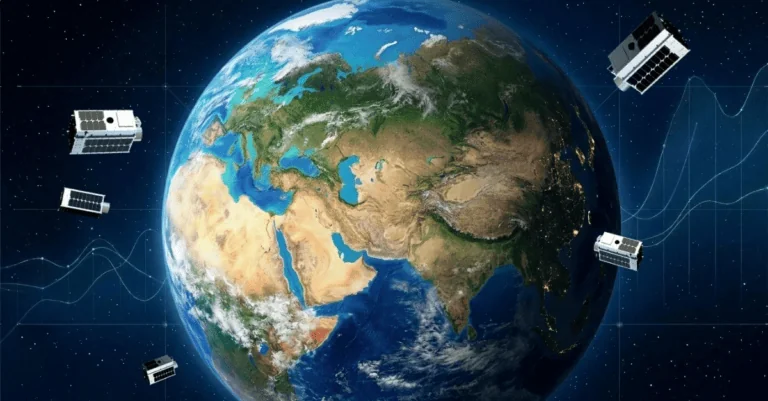
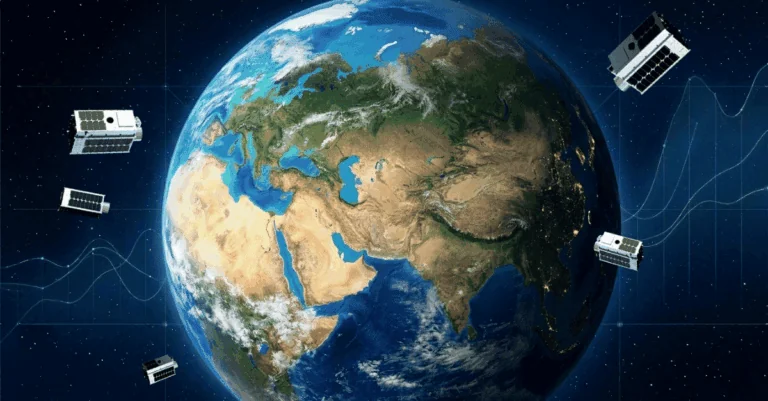
GHGSat operates the world’s largest fleet of satellites dedicated to identifying methane emissions. With 16 satellites launched to date, GHGSat monitors millions of industrial facilities annually, at a daily revisit frequency unmatched by any government or commercial system. Its proprietary Wide-Angle Fabry-Pérot (WAF-P) imaging spectrometer enables the detection of methane plumes down to approximately 25 square metres—roughly half the size of an Olympic swimming pool—and can pinpoint sources to individual pieces of industrial equipment.
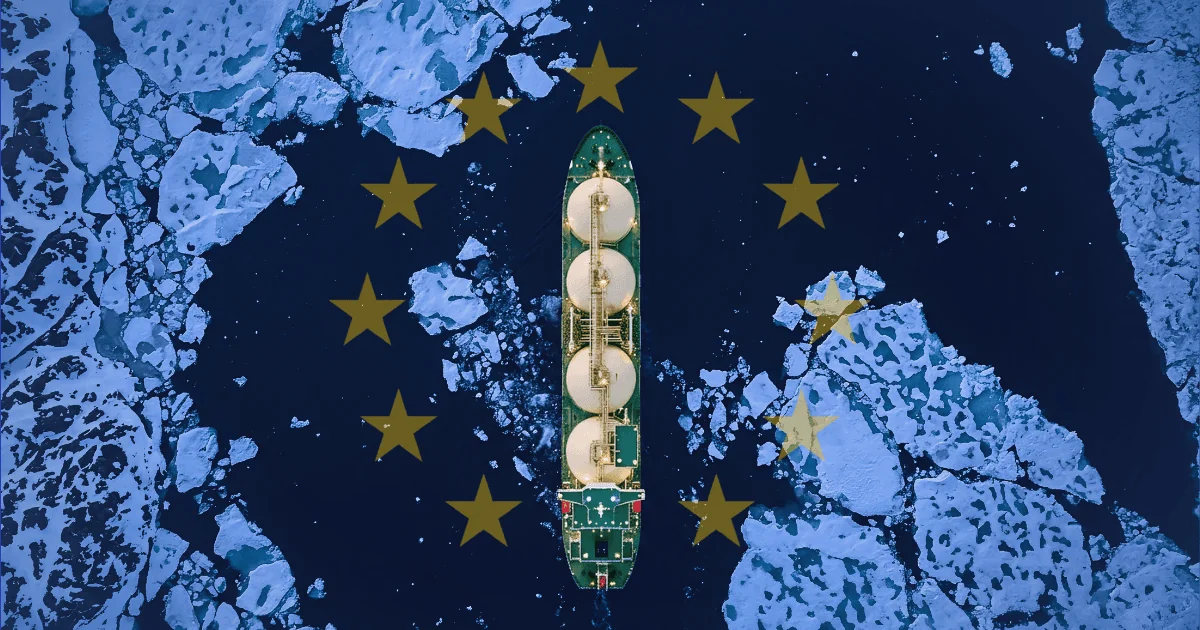
GHGSat’s contribution to the POSEIDON project centers on the liquefied natural gas (LNG) sector, where accurate, timely emissions intelligence is increasingly critical to both environmental compliance and energy supply chain resilience. As LNG becomes a cornerstone of Europe’s energy security strategy, rigorous and independent monitoring of LNG vessel emissions is no longer optional—it is essential.
“Joining POSEIDON reflects our conviction that the world’s most urgent environmental challenges require the world’s most advanced monitoring capabilities,” said Stephane Germain, GHGSat CEO. “We are proud to bring GHGSat’s precise emissions intelligence to this multinational effort and to demonstrate how Canadian innovation can help protect Europe’s oceans and secure its energy future.”
In 2025 alone, GHGSat detected more than 20,000 emissions events exceeding the super-emitter threshold of 100 kg/hr. Its technology has been independently validated by NASA and the European Space Agency, and is trusted by customers including ExxonMobil, Aramco, the UK Space Agency, and UN organizations.
Beyond methane, GHGSat also monitors carbon dioxide emissions and continues to broaden its sensing capabilities to address the full spectrum of industrial greenhouse gas sources. Within POSEIDON, this technical depth positions GHGSat as the consortium’s leading capability for detecting and quantifying ship-sourced gas emissions, including those from LNG vessels operating in EU and Arctic-adjacent waters.
POSEIDON has received funding from the European Union’s Horizon Europe research and innovation programme under grant agreement No 101296478.
About GHGSat: GHGSat is a global technology leader with pioneering emissions-monitoring capabilities that drive industrial efficiency with positive impact. Harnessing the power of satellites and aircraft, GHGSat traces emissions directly to their source at an unmatched speed, delivering the data and insights required to take action. A trusted partner for organizations around the world, GHGSat empowers decision-makers to tackle emissions, accelerating progress towards a resilient energy future.
For Media Inquiries:
Alison Boyer
Director of Communications, GHGSat
[email protected]